
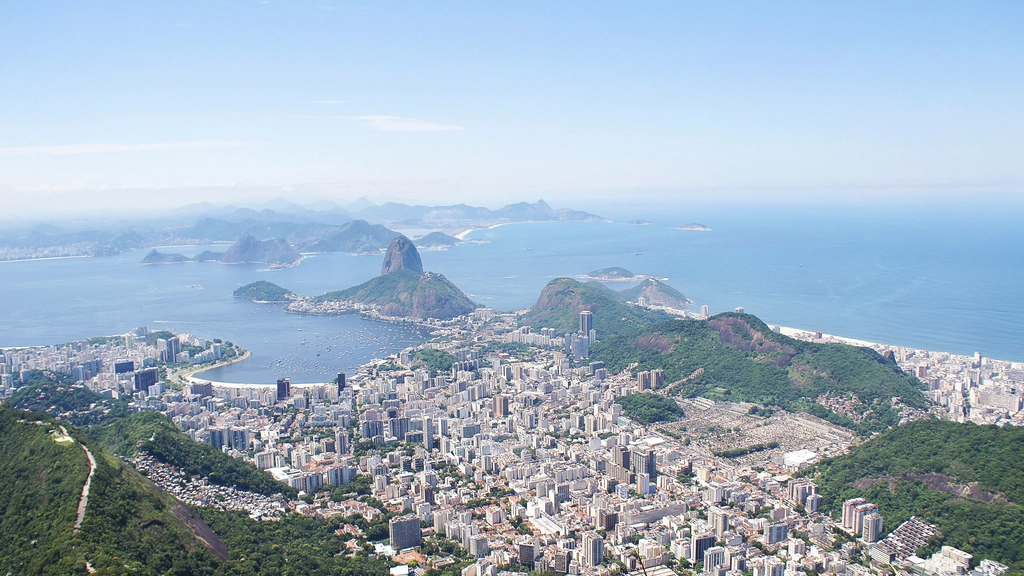
Recent trade tensions between the United States and China’s President Xi continue to place Brazil in the international spotlight. China is Brazil’s largest trading partner and their shared history goes back to the early 19th century when the two countries began their auspicious exchange of goods and services. Rich in natural resources, Brazil is a founding member of BRICS – Brazil, Russia, India, China and South Africa.

Brazil’s early foundation begins with the indigenous people of Brazil who were and still remain an essential part of Brazilian culture. Even so, like other Latin American nations, Brazil also experienced the effects of European colonization. Portuguese, not Spanish, is the official language – a direct result of Portuguese colonization that began in 1500 when explorer Pedro Alvares Cabral landed on the Brazilian coastline en route to India.
Following Cabral’s discovery, many events occurred (the Encyclopedia Britannica provides great historical discussion) including the enslavement of indigenous Brazilians and the invasion of Portugal by Napolean in 1807. Following the Napoleonic invasion, Portuguese prince Dom João and other royals fled to Brazil where they remained until it was safe to return. The arrival of Dom João actually had a very positive effect on Brazil. Before he became king, he issued a decree giving Brazil and Portugal equal status. In 1821, he made his son Dom Pedro the regent of Portugal.

In spite of a challenging political situation, Dom Pedro was able to achieve Brazilian independence and was crowned emperor in 1822. According to historians, Pedro I was known as an arbitrary ruler but he eventually established an advanced and relatively liberal constitution for the developing nation. As emperor, Pedro I faced many challenges but perhaps his greatest challenge was political. Controversial policies and an inability to get along with the legislator eventually forced Pedro I to abdicate. As a result, his five year old son Pedro II inherited the title of emperor. Once again, several power struggles ensued as the country waited for the young emperor to reach majority. At age 14, Pedro II achieved majority and was crowned on July 23, 1840. Although he was very young, Pedro II would prove to be an excellent emperor. Often described as democratic and modest, his rule ushered in an age of enlightenment. He also had to deal with several military conflicts and one of the bloodiest wars in South American history, the War of The Triple Alliance or Paraguayan War (1864-1870). The Brazilian empire prospered and grew under the emperor’s leadership but his reign was doomed. In 1889, Pedro II abdicated and fled to Europe following a military coup. And the rest, as they say, is history.

The Paraguayan War – Paraguay “lost up to 69% of its population, most of them due to disease, hunger, and exhaustion, including as much as 90% of its male population.”
References:
Source: Wikipedia Consequences of the Paraguayan War https://en.wikipedia.org/wiki/Paraguayan_Wa
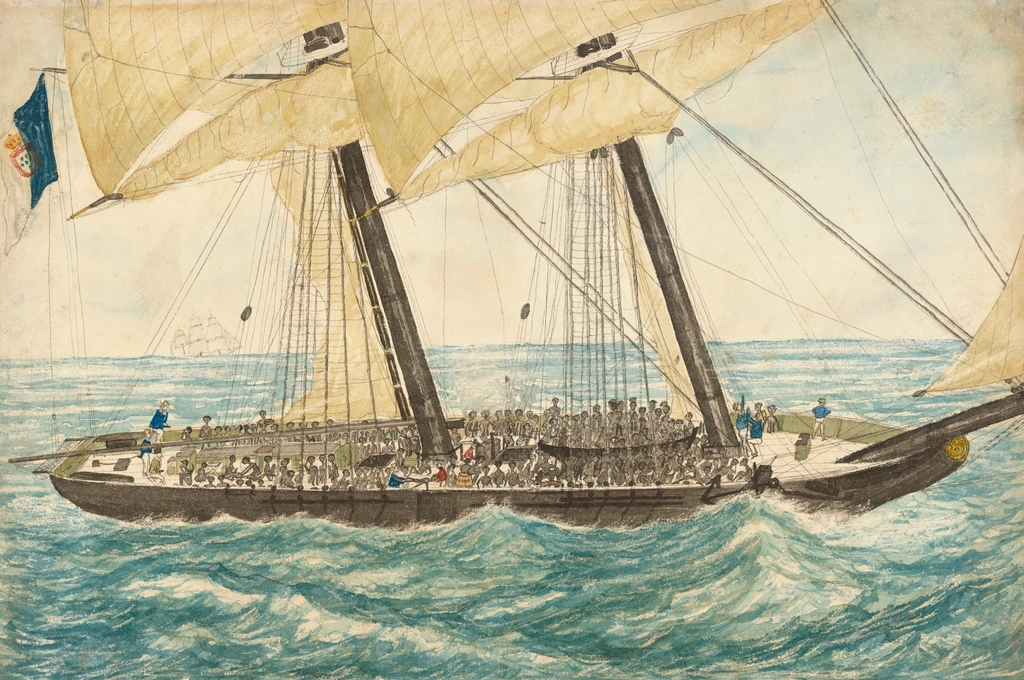
Image #3 Portuguese slave ship called The Diligente. water color painting by Lieutenant Henry Samuel Hawker, 1838. Source: Collection of the Smithsonian National Museum of African American History and Culture.The Diligente was engaged in the illegal slave trade when it was seized by the British in 1838. The Diligente had a long, disturbing and complicated history before it was finally captured.